
 By
By 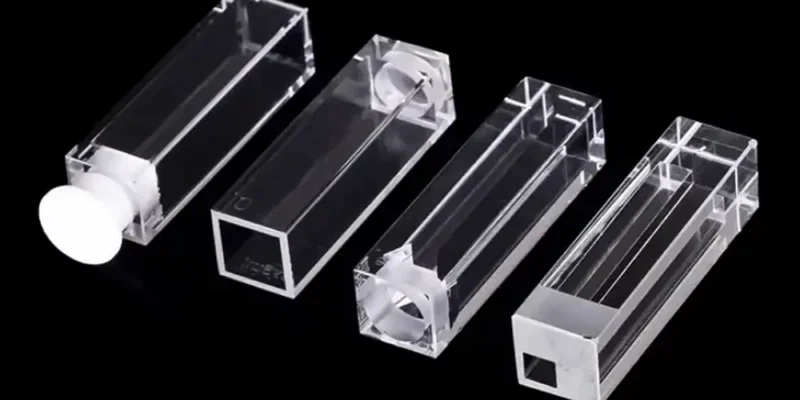
Most laboratories reach for the same 10 mm quartz cell by habit. It fits the standard holder. It is familiar. It works for a wide range of routine measurements. Yet the same default becomes a source of error when the sample volume is small, the concentration is high, or the wavelength sits near the edge of the material’s useful range.
Choosing UV Cuvettes according to the actual measurement conditions removes several common sources of unreliable readings. Path length, optical quality and practical handling matter more than the comfort of using the cell that has always been on the shelf.
Path length as the first practical filter
Path length directly scales the absorbance signal. A longer path increases sensitivity for dilute samples. A shorter path brings highly concentrated samples back into the linear range of the instrument without dilution. Using the wrong length forces either unnecessary sample preparation or acceptance of non-linear response.
Micro and ultra-micro cells exist precisely for limited sample volumes. They reduce the required volume to a few microlitres while still delivering a defined path. The trade-off is usually greater care in filling and cleaning. The gain is the ability to measure samples that would otherwise be too precious or too small for a standard cell.
Handling practicality in daily work
A cell that is theoretically perfect but awkward to fill, empty or wipe will be used less carefully. Black-walled micro cells reduce stray light yet require more attention during filling. Flow cells support continuous measurement but introduce their own cleaning and bubble risks. The best technical specification still fails if the daily handling routine cannot keep the optical surfaces in good condition.
Decision table of cuvette factors
| Factor | Prefer when | Watch for |
|---|---|---|
| Standard 10 mm path | Routine volumes and moderate concentrations | High concentration or very limited sample |
| Short path (1-5 mm) | Concentrated samples | Reduced sensitivity for dilute work |
| Micro / ultra-micro | Very small sample volumes | Greater care needed in filling and cleaning |
| Quartz material | UV wavelengths | Higher cost if only visible range is used |
| Glass material | Visible range only | Unsuitable for most UV work |
| Easy-clean design | High daily throughput | May trade off against specialised geometry |
The table is a practical starting point. The actual decision still depends on the samples and instruments in use.
Which cuvette details most affect measurement reliability
Path length determines whether the absorbance falls in a usable range. Optical quality and cleanliness determine whether the light that reaches the detector has been altered only by the sample. Handling practicality determines whether those two conditions can be maintained day after day.
Laboratories that select UV Cuvettes by matching these three factors to the real measurement usually spend less time troubleshooting unexplained baseline drift or non-linear results. The cell stops being a background assumption and becomes a deliberate part of method design.
Path length, optical quality and handling practicality determine usable data more than brand familiarity.









Comments